Materials guide · Kitchen
Kitchen Flooring Options: What Holds Up Best and What It Costs
Luxury vinyl, tile, hardwood, engineered wood, laminate, stone, cork and sheet vinyl compared on water resistance, comfort, durability and installed cost.
By the KitchenBathEstimates editorial team Published 7 min read
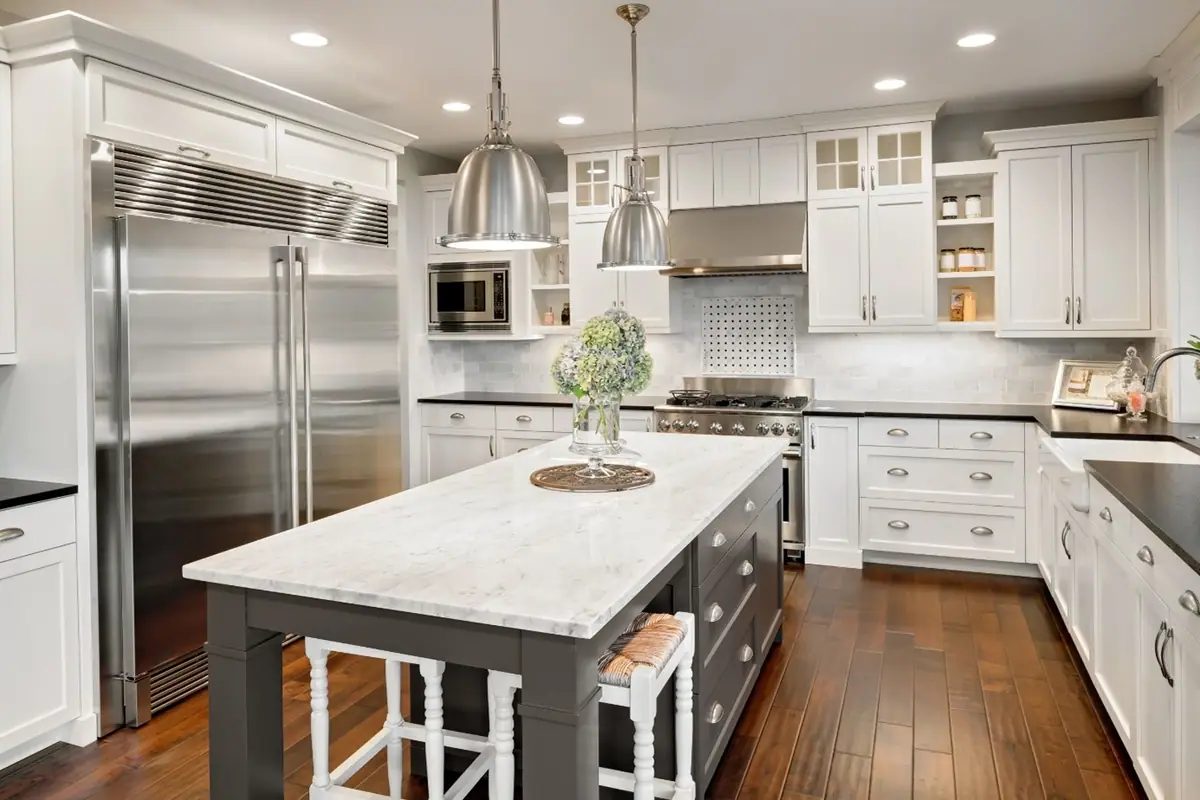
For most kitchens, luxury vinyl plank (LVP) or porcelain tile is the safest choice. LVP is waterproof, softer and warmer underfoot, and among the least expensive floors to have installed, at roughly $5 to $13 per square foot nationally. Porcelain costs more to install but stands up to water and stains and, well cared for, can last for generations. Hardwood and engineered wood can work in a kitchen if you wipe up spills promptly, while laminate, natural stone, cork and sheet vinyl each fit a narrower set of priorities.
A kitchen floor takes more abuse than any other in the house: dropped pans, dishwasher drips, chair legs, pets and hours of standing. Here's how the options compare.
Kitchen Flooring Compared
| Floor | Water resistance | Comfort underfoot | Durability | Installed cost per sq. ft. |
|---|---|---|---|---|
| Luxury vinyl plank | Waterproof versions widely available | Softer and warmer than tile | Most vinyl floors last 20+ years | $5 to $13 |
| Porcelain or ceramic tile | Waterproof surface; grout needs care | Hard and cold; dropped glasses break | Can last 100+ years | $10 to $20 |
| Solid hardwood | Can warp with too much moisture | Middle of the pack | A century or more if kept dry; can be refinished | $6 to $20 |
| Engineered wood | More stable than solid wood, but not waterproof | Middle of the pack | Can be refinished a limited number of times | $8 to $14 |
| Laminate | Varies; water-resistant lines exist | Middle of the pack | About 15 to 25 years | $3 to $12 |
| Natural stone | Waterproof when sealed; some stones etch | Hard; tough on joints | Can last 100+ years | $5 to $45 for stone, plus $3 to $15 to install |
| Cork | Must be sealed; vulnerable to spills | Soft and springy | Dents; 40+ years with care | $6 to $16 |
| Sheet vinyl | Very few seams for water to get through | Soft and warm | Most vinyl floors last 20+ years | $3 to $10 |
Costs are national ranges from Fixr and Bob Vila. Local labor rates, subfloor repairs and removing the old floor can push your price higher.
Luxury Vinyl Plank: The Practical Default
LVP has become the go-to kitchen floor for good reasons. It looks like wood or stone, it's comfortable, and waterproof versions are easy to find. Fixr's advice is simply to make sure you're buying a waterproof version for a kitchen. Vinyl also doesn't get cold in winter the way ceramic tile can, and over a cushioned underlayment or a subfloor with some give it's one of the more comfortable floors to stand on.
The spec to check is the wear layer, the clear top coat that protects the printed design. One major supplier recommends staying in the 12- to 20-mil range for busy households, such as homes with pets. In a kitchen, we'd lean toward the thicker end.
Porcelain and Ceramic Tile: Built to Outlast
Tile is about as water- and stain-resistant as kitchen floors get, and Fixr notes that porcelain, ceramic and stone can last 100 years or longer with good care. Porcelain is the better of the two: Fixr says ceramic is more likely to stain and more prone to cracking from impact.
The trade-offs are comfort and breakage. Porcelain is extremely hard, so a dropped glass or plate will likely shatter, and long cooking sessions are easier with a cushioned mat. Tile can also be slippery when wet, so choose tile rated for the job:
- Slip resistance: Look for the Interior Wet classification under ANSI A326.3, which calls for a wet DCOF of 0.42 or higher, and favor matte or textured finishes over glossy ones.
- Wear: For glazed tile, a PEI grade of 3 or higher is the standard for home floors.
- Grout: A high-performance cement, single-component or epoxy grout skips the sealing that standard cement grout needs.
Our bathroom tile guide explains these ratings in more detail; they apply to kitchen floors too.
Hardwood and Engineered Wood
Wood floors in kitchens are common and can last for decades, but they demand some discipline. Fixr warns that both solid and engineered wood can warp if exposed to excessive moisture. The National Wood Flooring Association's care advice is to clean spills immediately with a dry or slightly damp cloth and to avoid wet mops and steam mops, which damage the finish and the wood over time.
Engineered wood is a layer of real hardwood over a plywood base, which makes it less likely than solid wood to swell, buckle or warp. The catch is refinishing: Fixr says the top layer typically allows only five or six refinishings. Installed, Fixr's figures put solid hardwood at about $6 to $20 per square foot and engineered wood at about $8 to $14.
Wood makes the most sense when your kitchen opens onto rooms that already have wood floors and you want one continuous surface.
Laminate, Natural Stone, Cork and Sheet Vinyl
Laminate
Laminate is affordable at about $3 to $12 per square foot installed, but Fixr calls it one of the least durable kitchen floor materials, lasting about 15 to 25 years. Water resistance varies widely by product. The North American Laminate Flooring Association's LF-01 certification rates floors for residential or commercial use and offers optional surface swell and water resistance certifications, which are worth looking for in a kitchen. Read what the water warranty actually covers before you buy.
Natural stone
Slate, granite, marble and travertine are about as durable as flooring gets, and sealed stone resists water and stains well. It's also hard on feet and joints. Marble, limestone and travertine are calcareous stones that acids such as vinegar and lemon juice can dull or etch, which matters in a kitchen. Choose honed or textured finishes over polished ones for better grip. Bob Vila puts stone at about $5 to $45 per square foot, plus $3 to $15 for professional installation.
Cork
Cork is soft and springy, and it's a genuine pleasure for anyone who stands at the stove for hours. It needs a waterproof finish, though, and Fixr describes it as highly susceptible to spills and water damage. Heavy furniture and appliances can leave dents, which tend to recover over time, and cork can fade in direct sunlight. Expect about $6 to $16 per square foot installed.
Sheet vinyl
Sheet vinyl is the budget workhorse, at about $3 to $10 per square foot. It comes in wide rolls, so there are very few seams for water to seep through to the subfloor, and it's warm and comfortable underfoot. It doesn't feel as substantial as LVP or tile, but for a rental or a tight budget it's hard to beat.
How to Choose for Your Kitchen
- Busy household with kids or pets: LVP with a thick wear layer, or porcelain tile.
- You cook and stand for long stretches: LVP, cork or sheet vinyl for comfort; with tile or stone, budget for good mats.
- Wood floors in the rooms next door: Hardwood or engineered wood for one continuous floor.
- You plan to stay for decades: Porcelain tile, one of the longest-lasting floors you can buy.
- Tightest budget: Sheet vinyl or laminate.
Two planning details save headaches. Decide early whether the new floor runs under the cabinets or stops at them, and make sure the finished floor height still lets the dishwasher slide in and out. Our kitchen remodel steps and timeline shows where flooring fits in the sequence, and the kitchen remodel cost guide puts flooring in the context of the whole budget.
Get Kitchen Flooring Quotes
Tell us about your kitchen and we'll introduce a remodeling contractor who serves your area; it's free, there's no obligation, and your details go only to a contractor you approve.
Get Free EstimatesFrequently Asked Questions
What is the most durable flooring for a kitchen?
Porcelain tile. Fixr notes that porcelain, ceramic and stone floors can last 100 years or longer with good care, and porcelain is less likely to stain or crack than ceramic. Among softer floors, luxury vinyl with a thick wear layer holds up best.
Is luxury vinyl plank good for kitchens?
Yes, for most households. Waterproof LVP handles spills, is comfortable to stand on and costs about $5 to $13 per square foot installed, according to Fixr. Choose a wear layer in the 12- to 20-mil range or thicker for a busy kitchen, and remember that waterproof planks don't stop a leak from reaching the subfloor.
Can you put hardwood floors in a kitchen?
Yes, if you're diligent about water. Wipe spills right away with a dry or slightly damp cloth and skip wet mops and steam mops, as the National Wood Flooring Association advises. Engineered wood is more stable than solid wood in a kitchen's changing humidity, though it can be refinished fewer times.
Is laminate flooring waterproof?
Some is, much isn't. Water resistance varies by product, so look for laminate tested for water resistance, such as products carrying NALFA's optional water resistance or surface swell certifications, and read the warranty's water coverage carefully.
What is the cheapest kitchen flooring?
Sheet vinyl and laminate are the least expensive common options, at about $3 to $10 and $3 to $12 per square foot installed, according to Fixr. Luxury vinyl plank costs a little more but is waterproof and more durable than most laminate.
Sources
- Fixr – How Much Does a Kitchen Remodel Cost? (2026)
- Fixr – Best Flooring for Kitchens
- Fixr – Cost to Install Hardwood Flooring
- Fixr – Cost to Install Vinyl Plank Flooring
- Fixr – Cork Flooring Cost
- Bob Vila – The 5 Best Kitchen Flooring Options for Your Remodel
- MSI – What's a Wear Layer and Why This Luxury Vinyl Flooring Feature Matters Most
- MSI – Porcelain Tile Grades Explained
- Tile Council of North America – 2026 TCNA Tile Initiative
- Custom Building Products – Grout Choices for Designers (2024)
- National Wood Flooring Association – Wood Floor Maintenance
- NALFA – Product Certification Standards
- Natural Stone Institute – Cleaning Products for Natural Stone