Remodeling guide · Kitchen
What Are the Steps of a Kitchen Remodel, and How Long Does Each Take?
The phases of a kitchen remodel in the order they happen, with realistic durations, cabinet and countertop lead times, and the inspections that set the pace.
By the KitchenBathEstimates editorial team Published 7 min read
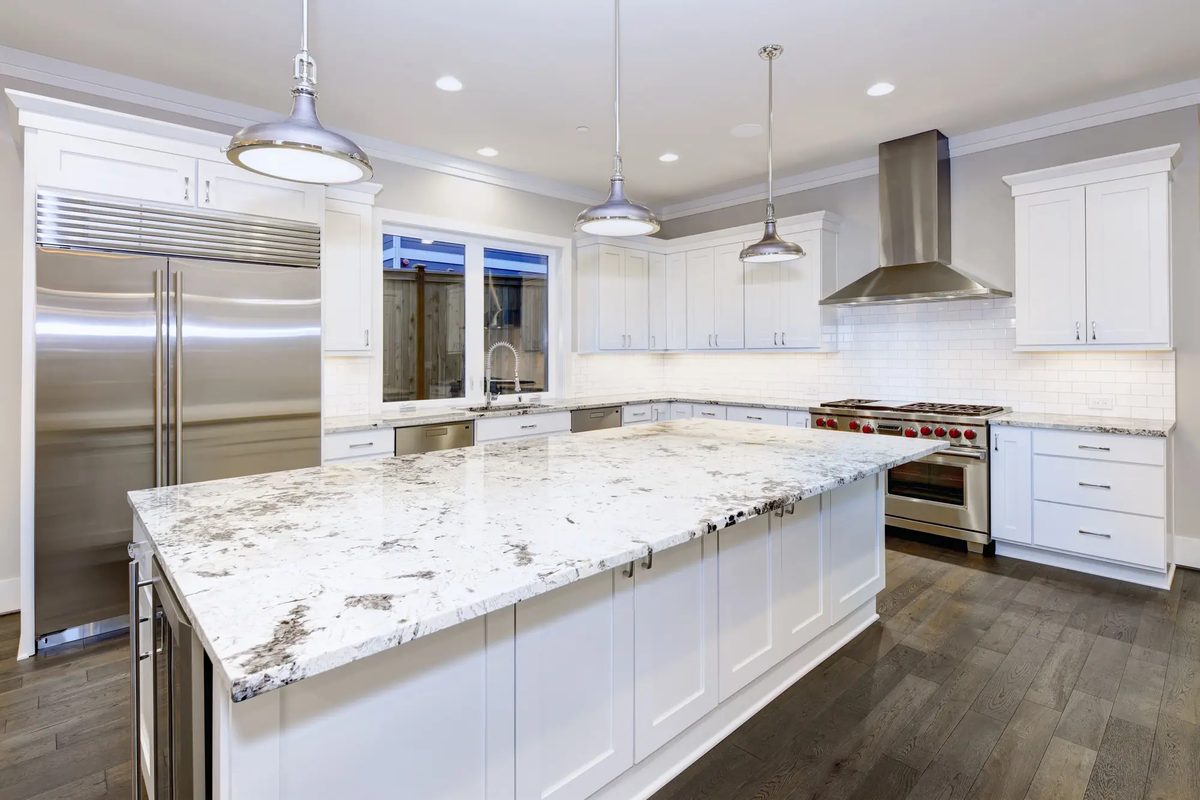
A kitchen remodel follows a set order: planning and design, permits, ordering, demolition, rough-in plumbing and electrical, inspections, drywall, cabinets, countertop templating and installation, finishes, and a final inspection. For a full remodel, construction usually takes 6 to 12 weeks once demolition starts. Projects that move a load-bearing wall, relocate plumbing or wait on custom cabinets can stretch to three to eight months.
The weeks before demolition matter just as much. Many schedule problems start there, with a decision made late or a product ordered late, so the planning phases deserve as much attention as the construction ones.
The kitchen remodel timeline at a glance
These durations come from published remodeling timelines and manufacturer guidance. Your contractor's schedule will depend on the size of the kitchen, how much of the layout changes, and how busy local trades and inspectors are.
| Phase | Typical duration | What sets the pace |
|---|---|---|
| Planning and design | As long as you need | Your decisions, designer and contractor availability |
| Permits | 1 to 2 weeks, sometimes longer | Your building department's workload |
| Ordering | 1 to 2 weeks (stock cabinets) to 3 to 6 months (custom) | Cabinet line, appliance availability |
| Demolition | 1 to 3 weeks, including debris removal | What turns up behind the walls |
| Rough-in plumbing and electrical | 2 to 4 days, plus 2 to 3 days if supply and drain lines move | How much of the layout changes |
| Inspections | Depends on scheduling | Inspector availability |
| Drywall | Several days | Three coats of joint compound, each dried |
| Cabinet installation | 2 to 3 days | Kitchen size, panels and trim |
| Countertops | About 2 weeks from template to install | Fabricator workload, slab shipping |
| Backsplash, flooring, paint | 1 to 3 days each | Material, pattern, subfloor condition |
| Fixtures, appliances, cleanup | 1 to 3 days | Delivery dates |
| Final inspection and punch list | Depends on scheduling | Inspector schedule, open items |
Before demolition: planning, permits and ordering
Planning and design
This is the phase you control. Settle the layout first, because keeping the sink, range and refrigerator where they are is the biggest single lever on both cost and time. Moving them means new supply, drain, gas or electrical runs and usually more inspections. Then choose cabinets, countertop material, appliances, sink and faucet, flooring, backsplash and lighting. Every selection left "for later" is a potential stop in the schedule.
This is also when you collect bids and hire. Our guides to choosing a remodeling contractor and comparing remodeling estimates cover that step.
Permits
Work that changes structure, plumbing, electrical or ventilation typically needs a permit; cosmetic work often doesn't. Fixr's remodeling timeline notes that approval alone can take a week or two, or longer where departments are busy. In most cases the contractor applies. Rules differ widely from town to town, so read our guide to remodeling permits and confirm with your local building department.
Ordering and lead times
Cabinets usually set the calendar. Fixr puts delivery at 1 to 2 weeks for stock cabinets, 4 to 8 weeks for semi-custom and 3 to 6 months or longer for fully custom. One major cabinet manufacturer tells buyers to expect a minimum of four weeks. Appliances can also take a few weeks to arrive.
Order the sink and faucet with the cabinets. Countertop fabricators want them on site when they template, and templating can't happen until the base cabinets are installed.
Demolition and rough-in
Demolition means removing cabinets, counters, appliances, flooring and often drywall, then hauling it all away. Fixr budgets 1 to 3 weeks for this phase because it includes debris removal and whatever turns up behind the walls; mold found behind old cabinets, for example, can add about a week. If your home was built before 1978, painted surfaces may contain lead, and federal rules require paid renovators in those homes to be lead-safe certified firms.
Rough-in is when the plumber, electrician and HVAC installer run new work inside the open walls and floor: supply and drain lines, appliance and lighting circuits, gas lines and range hood ducting. Fixr estimates two to four days for electrical and plumbing work, and two to three days to reroute water supply and drain lines for a relocated sink. Carpenters also use this window to repair framing and add blocking behind wall cabinets.
Inspections and drywall
Permitted work has to be inspected before it's covered up. Building departments typically check rough plumbing, electrical and mechanical work while the walls are still open, and some also inspect framing or insulation. Portland, Oregon, for example, states that all permitted work must be inspected before it is covered by drywall. Ask your contractor which inspections apply to your job and leave some slack around each one, since the crew can't close the walls until the inspector signs off.
Drywall goes up once the rough-in passes. Taping and finishing takes several days because the joints need at least three coats of joint compound, and each coat has to dry before the next goes on. Primer, and often the first coat of paint, go on before the cabinets, which is easier than cutting in around them later.
Cabinets, countertops and finishes
Cabinets
Cabinet installation itself usually takes two to three days. Open and inspect every box when the delivery arrives, not on installation day, so damaged or wrong pieces can be reordered while other work continues.
Templating and countertops
The fabricator measures for the countertops only after the base cabinets are installed and level. Cambria says the process after measurement takes approximately two weeks, though size, complexity and slab shipping distance can change that. Installation day is short, typically two to five hours.
During that gap you usually have no countertops and no working sink, which is worth planning around. Our guide to living through a kitchen remodel covers setting up a temporary kitchen.
Backsplash, flooring, paint and fixtures
After the countertops are in, the plumber sets the sink and faucet, and the backsplash tile goes up in a couple of days. Flooring takes one to three days, more if the subfloor needs repair; whether it goes in before or after the cabinets depends on the material. Professional painting takes two to three days. Hardware and light fixtures take about a day, and each appliance takes one to three hours to install once it's delivered.
Final inspection and the punch list
The final inspection closes the permit, and departments don't treat a permitted job as finished until it passes. Some also let a permit expire when too much time goes by between approved inspections; in Portland that limit is 180 days. Don't let a contractor wrap up with an open permit, because it can cause trouble later, including when you sell.
Then walk the kitchen with the contractor and write a punch list: paint touch-ups, door and drawer alignment, caulk lines, filler panels, appliance operation. The FTC advises making the final payment only after the work is finished and you're satisfied, so tie the last payment in your contract to a completed punch list and a passed final inspection.
If you're still early in the process, our kitchen remodeling hub brings together costs, design ideas and materials.
Get a Free Kitchen Remodel Estimate
Tell us about your kitchen and we'll introduce a remodeling contractor who serves your area; your details go only to a contractor you approve.
Get Free EstimatesFrequently Asked Questions
How long does a full kitchen remodel take?
Most full kitchen remodels take 6 to 12 weeks of construction once demolition begins. Planning, design, permits and ordering come first and can add weeks or months, especially with custom cabinets, which can take three to six months to arrive. Remodels that move load-bearing walls or plumbing can run three to eight months.
What is the correct order of steps in a kitchen remodel?
Plan and design, get permits, order cabinets and appliances, demolish, rough in plumbing, electrical and ventilation, pass the rough inspections, hang and finish drywall, prime and paint, install cabinets, template and install countertops, then add the backsplash, fixtures and appliances, finish painting and pass the final inspection. Flooring timing depends on the material.
Should flooring or cabinets go in first?
It depends on the floor. Tile and hardwood are often run under the cabinets, while floating floors such as luxury vinyl plank usually go in after the cabinets so they can expand and contract freely. Either way, make sure the dishwasher and refrigerator openings allow for the finished floor height.
How long will I be without a kitchen during a remodel?
Usually for most of construction, from demolition until the countertops are installed and the sink and appliances are hooked up. On a typical full remodel, that's most of the 6 to 12 weeks. The roughly two-week wait between countertop templating and installation is often the last stretch without a sink.
Can a kitchen remodel be done in a month?
A cosmetic update or a like-for-like replacement using stock cabinets can come close, since stock cabinets often ship in one to two weeks and nothing inside the walls changes. A remodel with layout changes, permits, inspections, or semi-custom or custom cabinets almost always takes longer.
Sources
- Fixr – How Long Does a Kitchen Remodel Take?
- This Old House – Kitchen Remodeling Trends and Tips for 2025
- KraftMaid – Bath & Kitchen Remodel Timeline
- Cambria – Prepare for Your New Countertops: Cambria Installation Day Checklist
- City of Portland – Residential Inspections: The Start-to-Finish Guide
- USG – Sheetrock Brand All Purpose Joint Compound Submittal Sheet
- U.S. EPA – Lead Renovation, Repair and Painting Program Rules
- Federal Trade Commission – How To Avoid a Home Improvement Scam