Materials guide · Kitchen
Kitchen Cabinet Materials and Construction: What's Worth Paying For
Plywood, MDF or particleboard boxes; wood, MDF, thermofoil or laminate doors; framed or frameless. What each means for durability, and the quality signs to check.
By the KitchenBathEstimates editorial team Published 7 min read
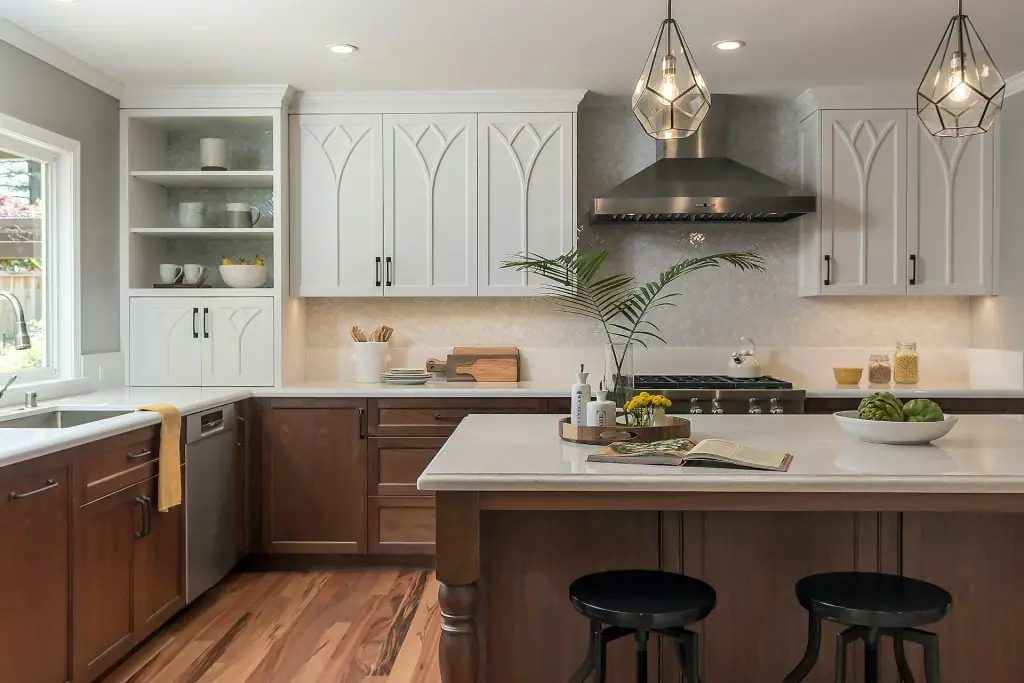
For most kitchens, the best value is a plywood cabinet box paired with solid wood or MDF doors, hung on soft-close hinges and full-extension drawer glides. Plywood holds screws better than MDF or particleboard and copes better with the occasional drip under the sink. MDF and particleboard boxes can serve well in dry spots, but whatever you buy, the construction details (box thickness, joinery, drawer boxes and hardware) matter as much as the material name in the brochure.
Here's how to read a cabinet spec sheet, and what to check with your own hands in a showroom.
Cabinet Boxes: Plywood, MDF or Particleboard
The box, sometimes called the carcass, carries the countertop and takes the abuse. This Old House recommends plywood over particleboard or MDF for the box because it's strong and resists warping, and notes that custom lines typically use 3/4-inch furniture-grade plywood. Stock cabinets more often use 1/2-inch MDF or particleboard with melamine interiors, and semi-custom lines tend to use 1/2-inch MDF with a plywood upgrade available.
| Box material | Strength and screw holding | Reaction to water | Where you'll find it |
|---|---|---|---|
| Plywood | Holds fasteners better than MDF | Resists moisture better than MDF, but can still swell | Custom lines; an upgrade in semi-custom |
| MDF | Doesn't anchor screws well; heavy | Fibers wick water, then swell and soften | Stock and semi-custom boxes |
| Particleboard | Takes a screw once or twice before it crumbles | The most susceptible to water damage | Budget stock lines |
The sink base is where the difference shows. Plywood tolerates a small leak better, while MDF and particleboard tend to swell and soften once water gets in. If you're buying a budget line, ask whether a plywood sink base is available, and fix leaks quickly whatever the box is made of.
All three panel types fall under federal formaldehyde emission rules. The EPA's TSCA Title VI standards cover hardwood plywood, MDF and particleboard, including finished goods made with them. Ask the dealer to confirm the cabinets comply.
Doors and Drawer Fronts
Doors get the attention, but they also take daily handling, steam and cleaning sprays. The main choices:
- Solid wood. The traditional choice for stained finishes. Well-made frame-and-panel doors let the center panel float in the frame so it can expand and contract with humidity.
- MDF. Smooth, stable and grainless, MDF takes paint well, which is why it's common for painted doors. It's heavy, and chips tend to be permanent.
- Thermofoil. A vinyl film formed over a core, usually MDF. It's affordable and easy to wipe clean, but it's more likely to peel than laminate and it doesn't like heat.
- Laminate. High-pressure laminate is the more durable type; low-pressure options such as melamine cost less. Laminate cleans easily but is difficult to repair.
- Wood veneer. A thin layer of real wood over a stable core, common in stock and semi-custom lines.
Painted wood doors have a quirk worth knowing before you order. Because paint flexes less than wood, a hairline crack can form where the door's frame pieces meet as the wood moves with the seasons. Manufacturers describe this as expected and say it's more visible on painted, primed or glazed finishes. If that would bother you, ask about MDF door options for a painted kitchen.
Framed vs. Frameless Cabinets
Face-frame cabinets are the traditional American style. A frame attached to the front of the box adds rigidity and gives doors and drawers a mounting surface. Doors can overlay the frame or sit inset within it.
Frameless cabinets, also called European style, skip the face frame. They have a cleaner, more contemporary look and slightly more interior space, which helps in small kitchens. Because there's no frame stiffening the front, box material and assembly quality count for even more.
Neither style is better built by definition. Pick the look you like, then judge the construction.
Finishes and Hardware
Factory finishes vary widely, and a good one should survive years of steam, spills and wiping. The industry's certification program tests finishes by exposing cabinet doors to heat and humidity, then cold, and to common kitchen substances such as vinegar, citrus juices, ketchup, coffee, olive oil and mustard.
Hardware is where cheap cabinets reveal themselves first. Look for:
- Hinges that are adjustable, so an installer can line up the doors, and soft-close, so doors don't slam.
- Drawer glides that are full-extension and soft-close. Good glides let you reach the back of the drawer, and some are rated for 100 pounds.
- Drawer boxes of solid wood such as maple or birch, joined with dovetails, with the bottom set into grooves instead of stapled to the underside.
Stock, Semi-Custom and Custom Compared
Construction tends to track the line you buy. Prices below are national figures per linear foot cited by This Old House from 2024 reports by Angi and CabinetSelect; they vary widely by region, door style and installation.
| Line | Typical box | Typical doors | Price per linear foot |
|---|---|---|---|
| Stock | 1/2-inch MDF or particleboard, melamine interior | Thermofoil or wood veneer | $35 to $81 |
| Semi-custom | 1/2-inch MDF, plywood upgrade available | Solid wood, or MDF with thermofoil or veneer | $90 to $650 |
| Custom | 3/4-inch furniture-grade plywood | Solid wood | $150 to $1,200 |
For full project budgets, including installation, see our kitchen cabinet cost guide.
Quality Signs to Check in the Showroom
You don't need to be a cabinetmaker to spot good construction. Open everything, pull everything, and look underneath.
- Box sides and back. Look at an exposed edge. Ask whether sides are 1/2 or 3/4 inch thick and whether the box is plywood, MDF or particleboard, and check the sink base specifically.
- Joinery. Dadoed or mortised joints with corner braces beat boxes held together by staples alone.
- Drawers. Pull a drawer all the way out. Dovetailed solid-wood boxes and smooth, full-extension glides are good signs; a drawer that wobbles side to side is not.
- Doors. Check that doors hang evenly with consistent gaps, and that the hinges have adjustment screws.
- Finish. Look at door edges and the backs of doors, where cheap finishes thin out.
- Certification. The Kitchen Cabinet Manufacturers Association's A161.1 certification means samples of the line passed tests of structure, doors, drawers and finish designed to simulate a lifetime of use. In one door test, doors are opened and closed through a full swing 25,000 times.
- Warranty. Read the exclusions, especially for heat and water damage.
Remember that cabinets carry the countertop. Heavy stone needs solid, level boxes, which matters if you're weighing quartz vs. granite countertops. When bids come in, compare them on the same construction specs, not just the door style; our guide to comparing remodeling estimates shows how.
Plan Your New Kitchen Cabinets
Tell us about your project and we'll introduce a remodeling contractor who serves your area; it's free, there's no obligation, and your details go only to a contractor you approve.
Get Free EstimatesFrequently Asked Questions
Is plywood or MDF better for kitchen cabinets?
For the cabinet box, plywood is usually the better choice: it holds screws better and resists moisture better than MDF, though it can still swell if it stays wet. MDF shines for painted doors and panels because its smooth, grainless surface takes paint well. Many good cabinets use both.
Are particleboard cabinets bad?
Not automatically, but particleboard is the least durable common box material. It's the most susceptible to water damage and doesn't hold screws well after repeated use. It can work in dry wall cabinets on a tight budget; be cautious about it under the sink.
What is the most durable cabinet door material?
It depends on the finish you want. Solid wood is durable and can be refinished, but it moves with humidity. High-pressure laminate is tough and easy to clean but hard to repair. Thermofoil is affordable but can peel, especially near heat. For a painted look, MDF avoids the joint lines that can appear on painted solid wood doors.
Do painted cabinet doors crack?
Painted solid wood doors can develop hairline cracks in the finish where the frame pieces meet, because paint doesn't flex as much as wood moves with seasonal humidity. Cabinet manufacturers describe this as normal and say it doesn't compromise the finish's protection.
What does KCMA certified mean?
It means the cabinet line passed the Kitchen Cabinet Manufacturers Association's A161.1 testing program, which checks structure, doors, drawers and finish with tests designed to simulate a lifetime of use. It's a useful baseline when comparing brands you don't know.
Sources
- This Old House – All About Kitchen Cabinets
- Bob Vila – MDF vs. Plywood: Choosing the Right Wood for Your Project
- Family Handyman – Guide to Kitchen Cabinet Materials
- US EPA – Formaldehyde Emission Standards for Composite Wood Products
- Holiday Kitchens – Thermofoil Cabinet Care
- Holiday Kitchens – Movement and Warping
- KCMA – A161.1 Quality Cabinet Certification
- KCMA – Cabinets Certified to Last