Materials guide · Kitchen
Quartz vs. Granite Countertops: Which Is Right for Your Kitchen?
Quartz is close to maintenance-free; granite takes heat better and no two slabs match. How they compare on durability, care, seams and installed cost.
By the KitchenBathEstimates editorial team Published 7 min read
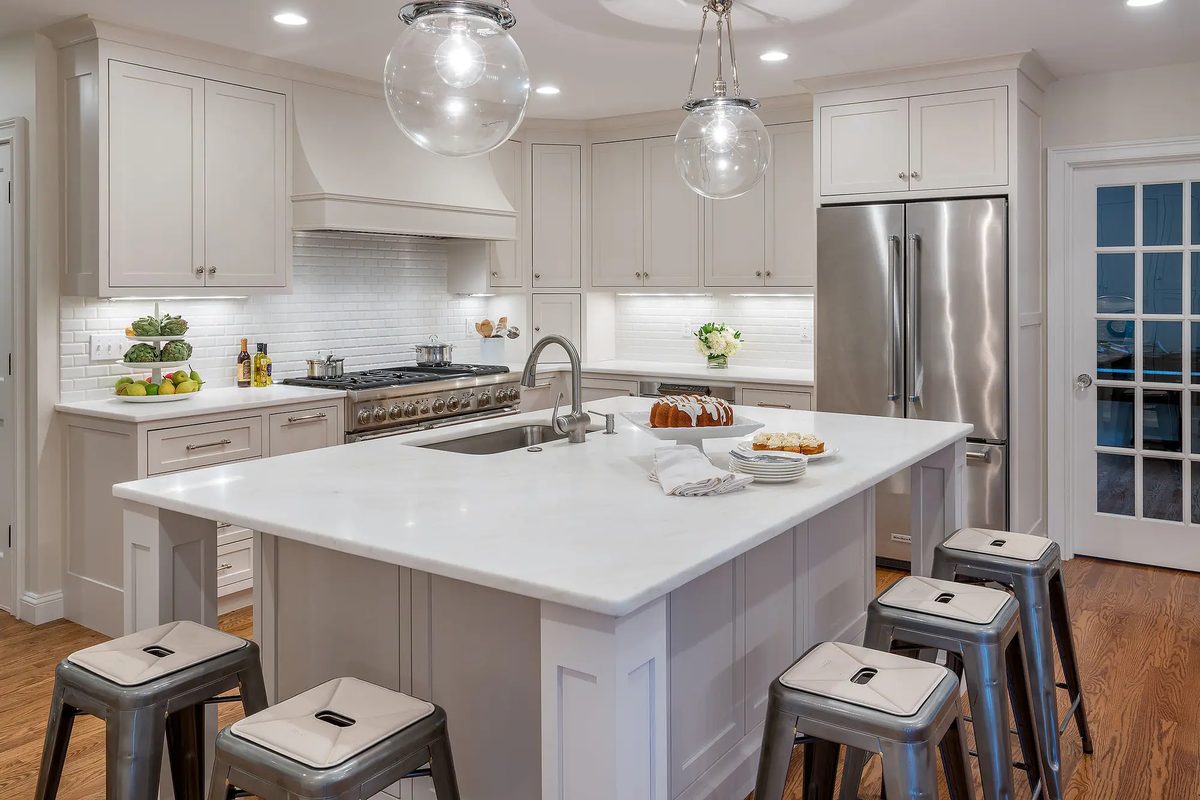
For most households, quartz is the easier countertop to live with. It never needs sealing, resists stains, and looks the same from one end of the kitchen to the other. Granite earns its place if you cook hot and fast, want a natural slab nobody else has, or simply fall for a stone that fits your budget. On price it's close to a draw: Fixr's cost guides put the national average for a typical kitchen at about $3,500 for either material.
So the real decision comes down to how you cook, how much upkeep you'll tolerate and the look you want.
What You're Actually Buying
Granite is natural igneous rock. It's quarried in large blocks, sawn into slabs and polished, so color and pattern vary from quarry to quarry and even across a single slab. That variation is the appeal, and it's also why you should choose your actual slabs at the stone yard instead of from a small sample.
Quartz countertops are engineered stone. Manufacturers crush quartz, mix it with resins and pigments, and press the mix into slabs. A 2026 hazard alert from OSHA and NIOSH notes that crystalline silica can make up as much as 95% of engineered stone, with resins, pigments and adhesives making up the rest. The resin is what makes quartz nonporous. It's also the material's weak spot when it comes to heat. (Quartzite, despite the name, is a natural stone; see the FAQ below.)
Quartz vs. Granite at a Glance
| Feature | Quartz | Granite |
|---|---|---|
| What it is | Engineered: crushed quartz bound with resin and pigment | Natural stone cut from quarried blocks |
| Sealing | Never; manufacturers say not to apply sealers | Often sealed at installation; many stones benefit from resealing |
| Stains | Nonporous; avoid harsh chemicals | Good when sealed; porous stones can absorb oil and wine |
| Heat | Resin can scorch or discolor; use trivets | Tolerates a hot pan well |
| Look | Consistent color; marble-look veining available | Every slab unique; pattern varies within a slab |
| Seams | Large slabs, fewer seams; seams show in light, veined designs | Busy patterns hide seams well |
| Installed cost | About $50 to $200+ per sq. ft. | About $40 to $150 per sq. ft. |
Heat
This is granite's clearest advantage. Fixr notes that granite formed under intense heat and can handle a hot pan set straight on it, while quartz is more likely to burn from direct heat. One major quartz maker's care guide asks owners to use a closed-weave hot pad or a solid trivet under pots and pans, and also under electric griddles, slow cookers, air fryers and roaster ovens. That second list catches people out, because those appliances sit in one spot for hours.
Stains and sealing
Quartz is nonporous, so spills sit on the surface until you wipe them up. Manufacturers say it never needs sealing, and Cambria goes further, telling owners not to apply sealers or topical treatments at all. The trade-off is chemical sensitivity. Care guides warn against oven cleaners, bleach, abrasive powders and strong acids or alkalis. Warm water and mild dish soap do the job.
Granite is porous to varying degrees. The Natural Stone Institute says most granite countertops don't strictly need sealing, but that sealing often makes sense and a quality sealer should last 10 to 15 years. Fixr is more conservative, citing resealing every three to five years with standard sealers, and more often for some light-colored stones. The simple check: if water beads on the busiest spot near the sink, the seal is still working. Sealing makes stone more stain-resistant, not stain-proof. On the plus side, granite is made mostly of silicate minerals such as quartz and feldspar, which the Natural Stone Institute says generally resist kitchen acids, a real advantage over marble.
Scratches and everyday wear
Both are hard surfaces that hold up to normal family use. Use a cutting board anyway: Cambria notes that cutting directly on quartz can leave visible marks, especially on solid, single-color designs.
Seams, Slab Size and Looks
Unless your counters are short, you'll have seams. Fabricators join pieces with color-matched epoxy, and how well that joint disappears depends on the pattern. Speckled granite hides a seam well. Solid-color quartz hides it reasonably well. Light quartz with long, marble-style veins is the hardest, because the veins rarely line up perfectly across a joint.
Slab size decides how many seams you get. Quartz comes in predictable sizes; one major manufacturer lists its jumbo slabs at about 128 by 64.5 inches, in 2 cm and 3 cm thicknesses, which covers many islands in a single piece. Granite slab sizes vary by quarry and block, so a big island may take some hunting to find the right slab.
As for looks, quartz gives you consistency: the sample you approve is what shows up, and white or marble-look designs are its strength. Granite gives you depth and movement no factory copies, along with the surprises of a natural material.
What They Cost Installed
| Option | National installed price |
|---|---|
| Builder-grade quartz | $50 to $75 per sq. ft. |
| Mid-grade quartz | $75 to $125 per sq. ft. |
| Premium quartz | $125 to $200+ per sq. ft. |
| Granite, most slabs | $40 to $150 per sq. ft. |
| Typical quartz kitchen, about 35 sq. ft. | $2,600 to $4,400; average $3,500 |
| Typical granite kitchen, about 30 sq. ft. | $2,500 to $5,000; average $3,500 |
The cheapest granites start a little below the cheapest quartz, while rare and exotic granites run well past premium quartz; Fixr notes that some exotic slabs cost up to $400 per square foot for the stone alone. Edge profiles, sink cutouts, backsplashes and removal of old tops add to either bill. Our countertop installation cost guide breaks down those extras, and local prices can sit well above or below these national figures.
A Note on Fabrication Dust
Cutting, grinding and polishing any stone countertop releases fine crystalline silica dust, and breathing it can cause silicosis, an incurable lung disease. The OSHA and NIOSH alert singles out engineered stone because of its high silica content; granite typically contains 10% to 50%. The hazard the agencies describe is in fabrication shops and during on-site finishing work.
It's fair to ask a fabricator how they control dust, such as cutting and polishing with water, and to keep kids and pets out of the room if any cutting happens in your house. The same alert notes that some newer engineered stones contain far less silica, so ask about those if it matters to you.
Which Should You Choose?
Quartz is the better fit if:
- You want a counter you can wipe down and forget, with no sealing schedule.
- Kids, guests or a hectic routine mean spills don't always get cleaned up right away.
- You want a white or marble look with predictable color from slab to slab.
Granite is the better fit if:
- You cook a lot and want a surface that tolerates heat.
- You want a natural, one-of-a-kind slab and enjoy picking it out in person.
- You're on a tighter budget and like the entry-level colors at your local yard.
Either way, stone is heavy, so the base cabinets underneath need to be solid and level; our guide to kitchen cabinet materials covers what to look for. When bids come in, check that each names the same grade, thickness, edge and cutouts, and see our guide to comparing remodeling estimates for the rest.
Get a Local Countertop Quote
Tell us about your kitchen and we'll introduce a remodeling contractor who serves your area; it's free, there's no obligation, and your details go only to a contractor you approve.
Get Free EstimatesFrequently Asked Questions
Is quartz more expensive than granite?
Not necessarily. Fixr's national figures put quartz at about $50 to $200+ per square foot installed and granite at about $40 to $150, and the average for a typical kitchen is around $3,500 for either. Entry-level granite tends to undercut entry-level quartz, while exotic granite can cost more than premium quartz. Local fabricator pricing matters more than the material name.
Do quartz countertops need to be sealed?
No. Quartz is nonporous, and manufacturers say it never needs sealing; Cambria specifically tells owners not to apply sealers or other treatments. Clean it with warm water and mild soap, and keep oven cleaner, bleach and abrasive powders away from it.
How often should granite countertops be sealed?
It depends on the stone and the sealer. The Natural Stone Institute says a quality sealer should last 10 to 15 years, while Fixr cites three to five years for standard sealers and more often for some light stones. Use the water test: if drops bead up on the surface, the seal is still doing its job.
Can you put a hot pan on granite or quartz?
Granite generally tolerates a hot pan. Quartz contains resin that can scorch or discolor, so manufacturers ask you to use a trivet or hot pad under pots and pans and under heat-producing appliances such as slow cookers and air fryers. A trivet is a good habit on granite too.
Is quartzite the same as quartz?
No. Quartz countertops are engineered from crushed quartz, resin and pigment. Quartzite is a natural stone, quarried and cut into slabs like granite, so it varies from slab to slab and follows natural-stone care rules. Ask your fabricator how the specific stone you're considering should be sealed and cleaned.
Sources
- Fixr – How Much Do Quartz Countertops Cost? (2026)
- Fixr – How Much Does It Cost to Replace Kitchen Countertops in 2026?
- Fixr – Granite Countertops Cost
- Natural Stone Institute – Sealing Natural Stone Countertops
- Natural Stone Institute – Cleaning Products for Natural Stone
- Cambria – Quartz Product Care
- Caesarstone – Care and Maintenance
- Caesarstone – Design and Specification
- OSHA and NIOSH – Hazard Alert: Worker Exposure to Silica during Countertop Manufacturing, Finishing, and Installation (2026)