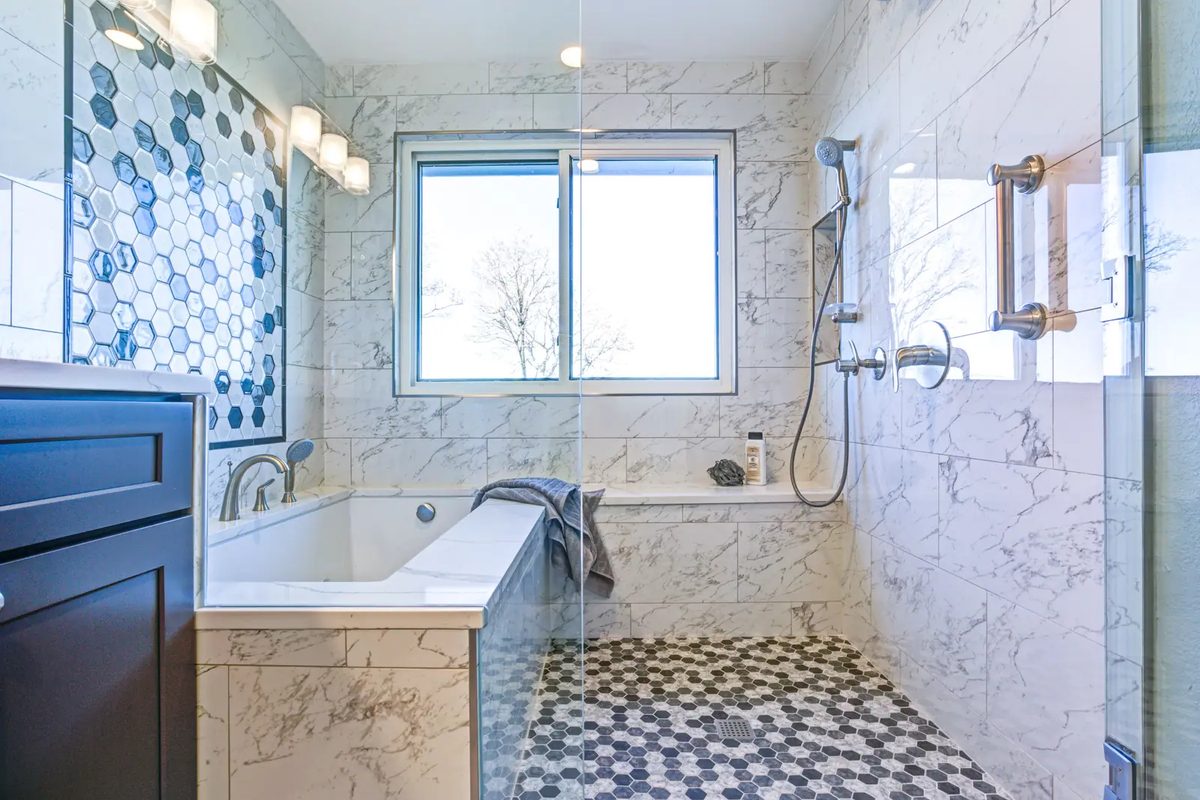
Materials guide · Bathroom
Shower Wall Options: Tile vs. Acrylic vs. Solid Surface vs. Panels
Tile, acrylic and fiberglass, solid surface, cultured marble, PVC and laminate panels, and porcelain slabs compared on cost, cleaning, durability and installation.
By the KitchenBathEstimates editorial team Published 7 min read
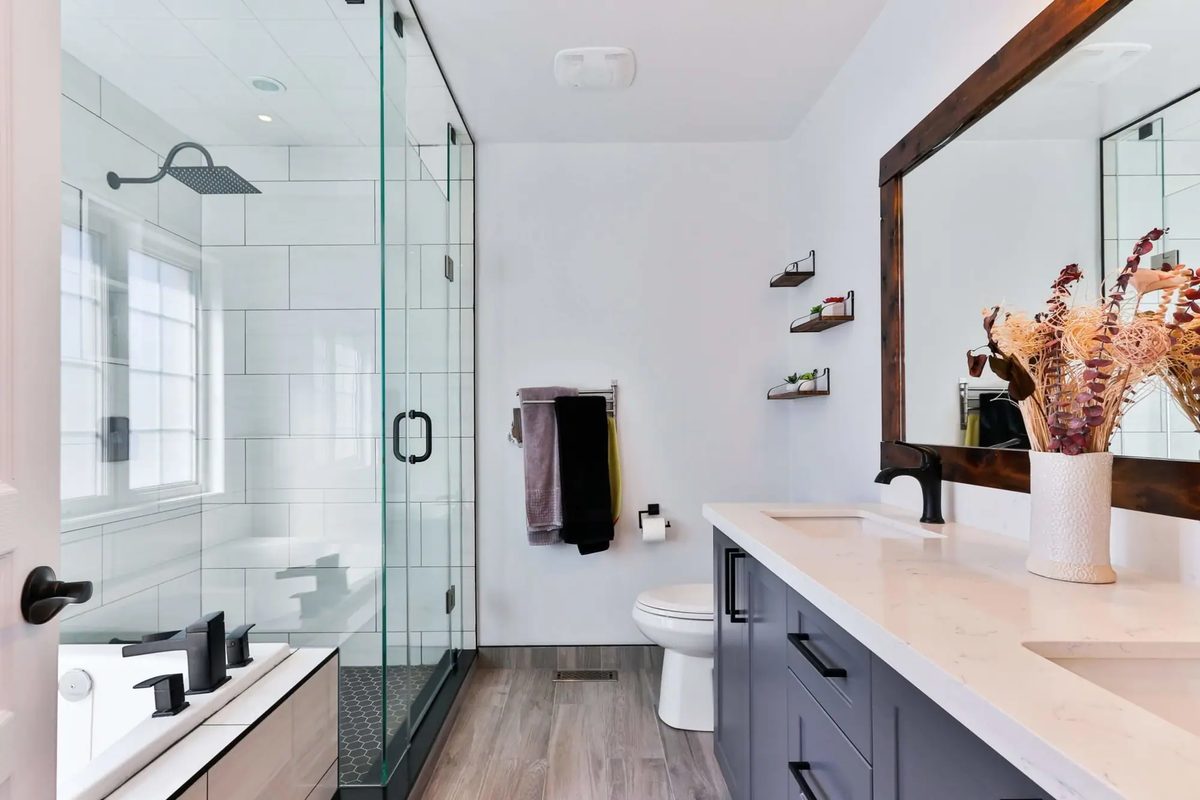
Tile is still the best shower wall for most homeowners who plan to stay put: it lasts, it can look like almost anything, and a cracked tile can be replaced without tearing out the wall. If you'd rather have a shower that goes in fast and wipes clean without scrubbing grout, acrylic or another grout-free panel is the practical, lower-cost choice. Solid surface and cultured marble sit in between, and porcelain slabs give you a stone look with almost no grout lines at the top of the price range.
With any of them, what's behind the surface decides how long the shower lasts. Here's how the options compare.
Shower Wall Options at a Glance
| Option | Cost level | Cleaning | Durability | Installation |
|---|---|---|---|---|
| Ceramic or porcelain tile | Moderate to high; about $2,700 for a tiled 3-by-4-foot shower (Fixr) | Grout lines need scrubbing; cement grout needs sealing | Long-lasting over good waterproofing; grout eventually needs renewal | Several days; skilled labor |
| Acrylic | Low to moderate | Mild soap and a soft cloth; no grout | More durable than fiberglass; scratches more easily than tile | Most surrounds go in within a day |
| Fiberglass | Lowest of the prefab options | Easy | The least durable prefab option | Fast |
| Solid surface | Moderate to high | Liquids can't penetrate the surface | Scratches can be sanded out; most damage is repairable | Panels fabricated to size |
| Cultured marble | Moderate to high | Grout-free | Durable; harder to repair than solid surface | Made to order |
| PVC panels | Low | Easy | Basic look; limited styles | Fast |
| Laminate wet-wall panels | Moderate; varies by system | Grout-free; sealant at seams and corners | Depends on the system and installation | Tongue-and-groove; some go over existing tile |
| Porcelain slabs | Highest | Very few joints; no sealing | Very durable | Heavy; needs a specialist |
Cost levels compare the options with one another; your local price depends on the size of the shower, the condition of the walls and labor rates. For complete prefab and tiled shower prices, see our tub-to-shower conversion cost guide.
Tile: The Long-Term Standard
Tile gives you the widest range of looks, from classic subway to large-format marble look, and porcelain is the strongest candidate for shower walls because it absorbs 0.5% or less of its weight in water. Fixr puts the national average for tiling a 3-by-4-foot shower at about $2,700, with most projects between $1,800 and $5,000.
The ongoing chore is grout. Standard cement grout is porous and needs sealing to resist water and stains; epoxy and other high-performance grouts generally don't. When grout finally wears out, This Old House puts regrouting a shower at about $1,500 on average, with a range of $600 to $2,500. Choosing a better grout up front, as our bathroom tile guide explains, pays for itself in less scrubbing.
Codes vary by city and state, and your local building department has the final word. Our guide to remodeling permits explains when a shower project needs one.
Grout-Free Panels: Acrylic, Fiberglass, PVC and Laminate
Acrylic and fiberglass
Molded acrylic and fiberglass walls are the quickest way to a new shower. Most surrounds go in within a day, there are no grout lines to scrub, and mild soap and a soft cloth handle routine cleaning. Fiberglass is usually the least expensive option and the least durable; acrylic costs a little more, holds its finish better and lasts longer.
The downsides are real, though. Acrylic is more prone to scratches than stone or porcelain tile, hard water and daily wear can leave it dull over time, and harsh cleaners, especially those with bleach or ammonia, can damage the finish. Style choices are more limited, too. If you're replacing a tub with a shower, these units are a common choice, and our tub-to-shower conversion cost guide covers the full project.
Before ordering a one-piece unit, measure the doorways and hallways it has to pass through. Multi-piece kits exist for remodels for exactly that reason.
PVC and laminate wall panels
PVC panels are the budget end of the panel world: moisture-resistant and easy to wipe down, but limited in style and less convincing up close than tile or stone-look surfaces. Make sure the product you buy is sold and warrantied for use inside a shower, not just on bathroom walls.
Laminate wet-wall systems are a step up. One widely sold system bonds a decorative high-performance laminate surface to a solid composite core, joins panels with tongue-and-groove edges instead of grout, and seals corners and seams with matching sealant. The manufacturer approves installation over several substrates, including existing tile, which can save demolition. Because shower panels also fall under the code rules for what's behind them, confirm with your installer that your existing wall qualifies.
Solid Surface and Cultured Marble
Solid surface panels are sheets of a nonporous composite fabricated to fit your shower. One major solid surface maker says liquids can't penetrate the material and that, because it's the same all the way through, light scratches can be sanded out and most damage, even impact or heat damage, can usually be repaired on site. Expect to pay more than for acrylic, since the panels are cut and fitted to your walls.
Cultured marble is a man-made stone of marble dust, resin and pigments, cast into wall panels and bases. It's grout-free and durable, and it usually costs more than acrylic or fiberglass.
Both are good middle-ground choices if you want a stone-like look with less cleaning than tile.
Porcelain Slabs: Stone Look, Few Joints
Large porcelain slabs are the newest high-end option. One manufacturer's slabs measure about 124.5 by 61.5 inches of usable surface, in thicknesses from 6 mm to 20 mm, so a standard alcove can be covered with a handful of pieces. You get the look of marble or concrete with very few joints, and porcelain's low absorption means no sealing.
The catch is cost and installation. Slabs sit at the top of the price range, and the pieces are big, heavy and unforgiving to cut. The tile industry's ACT program has a specific certification for installing gauged porcelain panels and slabs, so ask whether the installer holds it or can show you completed slab showers. Slabs still need the same waterproofing behind them as tile.
How to Choose
- Forever home, design-driven: Tile or porcelain slabs.
- Quick update, rental or tight budget: Acrylic, fiberglass or PVC panels.
- Low maintenance with a stone-like look: Solid surface or cultured marble.
- Covering old tile without demolition: A laminate wet-wall system approved for that substrate.
Whatever you pick, think about the future while the walls are open. Solid backing for grab bars is simple to add while the studs are exposed, and it saves cutting into a finished wall later; our guide to planning an aging-in-place bathroom covers where it usually goes.
Get Quotes for Your Shower Remodel
Tell us about your bathroom and we'll introduce a remodeling contractor who serves your area; it's free, there's no obligation, and your details go only to a contractor you approve.
Get Free EstimatesFrequently Asked Questions
What is the cheapest way to redo shower walls?
Panels are the cheapest route, with fiberglass and PVC at the low end. Tile and porcelain slabs cost more because of the labor and waterproofing involved.
Is acrylic or tile better for a shower?
Tile lasts longer, looks more custom and can be repaired a piece at a time, but it takes days to install and the grout needs upkeep. Acrylic goes in quickly, has no grout and costs less, but it scratches more easily and can dull over time. Choose tile for a long-term bathroom and acrylic for speed, budget and easy cleaning.
Can shower wall panels go over existing tile?
Some can. At least one laminate wet-wall system lists existing tile among its approved substrates. The old tile must meet the manufacturer's requirements, and local code still applies to what's behind shower panels, so have your installer confirm before you skip demolition.
What goes behind tile in a shower?
A waterproofing membrane over a backer board rated for wet areas. The model residential code lists glass mat gypsum, fiber-reinforced gypsum, fiber-cement and cementitious backer boards for tile in tub and shower areas. Check with your local building department, since adopted codes vary.
Do porcelain slab shower walls need sealing?
The porcelain itself doesn't, because it absorbs 0.5% or less of its weight in water. The few joints between slabs and at the corners still need to be filled or sealed by the installer, and the wall behind the slabs needs the same waterproofing as a tiled shower.
Sources
- Fixr – Shower Tiling Cost
- This Old House – How Much Does It Cost to Regrout a Shower? (2026)
- Schluter Systems – Waterproofing Membrane for a Shower
- UpCodes – IRC R702.4.2 Backer Boards
- Corian – Use and Care
- Wilsonart – Wetwall Waterproof Wall Panels
- Caesarstone – Design and Specification
- Tile Council of North America – 2026 TCNA Tile Initiative