Remodeling guide · Bathroom
What Are the Steps of a Bathroom Remodel, and How Long Does Each Take?
Every phase of a bathroom remodel in order, from planning and permits to waterproofing, tile and grout cure times, shower glass and the final inspection.
By the KitchenBathEstimates editorial team Published 7 min read
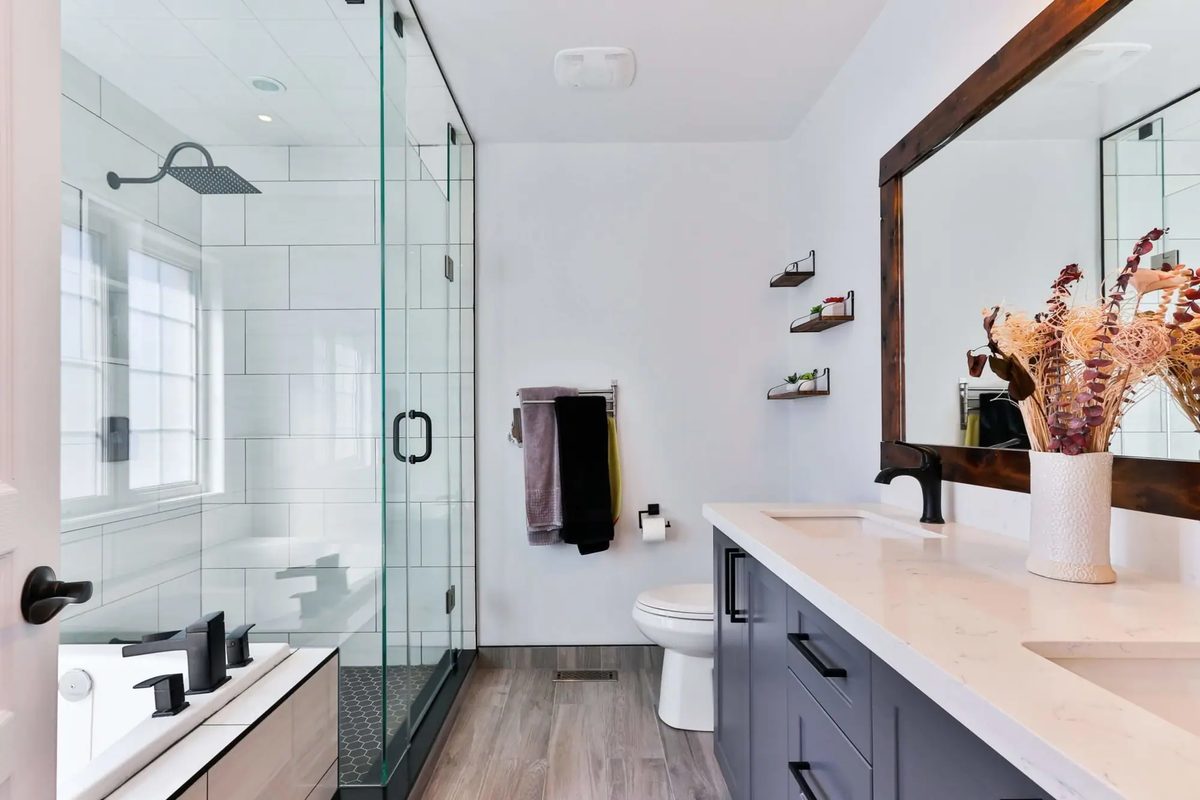
A bathroom remodel moves through the same sequence every time: planning and design, permits, ordering, demolition, rough-in plumbing and electrical, inspection, wall board and waterproofing, tile and grout, vanity and fixtures, shower glass, and a final inspection. Most small bathroom remodels take one to three weeks of work. In a 2026 This Old House survey of 1,000 homeowners, nearly two-thirds said their bathroom remodel lasted one to four weeks, and about one in five said it ran longer than a month.
What usually separates a two-week job from a six-week one is the shower. A tiled, site-built shower adds waterproofing, a water test, tile and grout cure times, and a custom glass order that can't be measured until the tile is finished.
The bathroom remodel timeline at a glance
| Phase | Typical duration | Notes |
|---|---|---|
| Planning and design | Varies | Fixture locations drive cost and time |
| Permits | A week or two, sometimes longer | Usually required when fixtures move or wiring changes |
| Ordering | Finish before demolition | Vanity, tub or shower base, valve, tile, fan, lighting |
| Demolition | 1 to 2 days | Longer with mortar-set tile or hidden water damage |
| Rough-in plumbing and electrical | A few days | Longer if drains move through joists or a slab |
| Rough inspection | Depends on scheduling | Walls stay open until it passes |
| Waterproofing | About 1 hour to 24 hours of membrane cure before testing | Depends on product and room temperature |
| Water test | At least 15 minutes where code requires one | Done before any tile goes on |
| Tile | 3 to 5 days | Larger rooms and intricate patterns take longer |
| Grout | Applied 24 to 48 hours after setting; about 72 hours to cure | Rapid-setting products shorten this |
| Vanity, toilet, trim, paint | A few days | Plumber returns to set fixtures |
| Shower glass | About 2 weeks after final measurement | Measured only after tile is complete |
| Final inspection | Depends on scheduling | Closes the permit |
Before demolition: planning, permits and ordering
Planning and design
Keeping the toilet, vanity and shower where they are saves the most time and money, because the drains and supply lines stay put. Decide early whether the shower walls will be tile or panels. Acrylic and solid-surface walls skip the tile and grout cure times entirely; our guide to shower wall options compares them. If you're replacing a tub with a walk-in shower, see our tub-to-shower conversion cost guide.
Permits
Denver's rules are a good example of what's typical: new or relocated plumbing or electrical fixtures, and new or rerouted ductwork, need a permit, while like-for-like replacements generally don't. Fixr's remodeling timeline notes that approval alone can take a week or two. Rules vary by city and county, so check our remodeling permits guide and call your local building department.
Ordering
Have every product on site or on a firm delivery date before demolition: vanity and top, toilet, tub or shower base, tile, exhaust fan, lights, mirror and accessories.
Demolition, rough-in and inspection
This Old House puts most professional bathroom demolition at one to two days, depending on the size and complexity of the room. Tile set in a thick mortar bed or rot under an old toilet takes longer. In homes built before 1978, assume painted surfaces may contain lead: federal rules require paid renovators to be lead-safe certified firms, and This Old House notes that contractors who suspect lead or asbestos must stop and arrange testing.
Rough-in follows: drain and supply lines, the shower valve, the exhaust fan duct, and circuits for lighting, outlets and any heated floor. Expect a few days, more if a drain has to move through floor joists or a concrete slab. Permitted work must then be inspected before it's covered, so the walls stay open until the rough inspection passes.
Waterproofing and the water test
After the inspection, the crew installs cement board or foam board in the shower and builds the waterproofing layer, usually a liquid-applied or sheet membrane over the walls, floor and curb. Cure times depend on the product and room temperature:
- One rapid-curing liquid membrane allows a flood test or tile one hour after the final coat.
- Another liquid membrane can take tile as soon as the final coat is dry to the touch, but needs two full hours of cure at 70°F before a flood test, or a full 24 hours at 50 to 69°F.
Before any tile goes on, the shower floor should be water-tested. Richmond, Virginia's requirement shows what that involves: plug the drain, fill the shower floor with water to at least two inches at the threshold, and hold it for at least 15 minutes with no sign of leakage, or longer if the membrane maker requires it. Richmond asks for a signed certification of the test at final inspection. A leak caught now costs an afternoon; the same leak found after tile means tearing the shower out.
Tile, grout and cure times
This Old House says a professional typically needs three to five days to retile a bathroom, longer for large rooms and intricate patterns. Behind that number are cure times you can't rush:
- Mortar before grout: one major grout maker calls for the setting mortar to cure 24 to 48 hours before cement grout goes on, unless rapid-setting mortar is used.
- Grout cure: the same maker says to keep the room above 50°F for at least 72 hours for the grout to cure properly.
- Before showering: check the product. One pre-mixed grout calls for three days before water exposure on shower walls and seven days on shower floors.
- Corners and edges: inside corners and the joints where walls meet the tub or floor get flexible sealant instead of grout, because the grout maker's instructions require movement joints at perimeters and changes of plane.
Ask your installer which products they're using and how long you'll need to wait before the first shower.
Fixtures, glass and the final inspection
Once the grout has cured, the plumber sets the vanity, sink, faucet and toilet and installs the shower trim. Lighting, the fan grille, the mirror, accessories and paint follow, which usually takes a few days.
Custom shower glass comes last. One glass fabricator says the tile must be cured and the surround complete before final measurement, and a custom frameless door usually takes about two weeks after that measurement is approved. Installation is a single visit of two to four hours. Until then, a tension rod and curtain can make the shower usable once the grout has cured.
The final inspection closes the permit. Walk the room with the contractor, check caulk lines, grout haze, fan operation, drain speed and every GFCI outlet, and make the last payment only after the work is finished and you're satisfied, as the FTC advises. For more on planning the room, our bathroom remodeling hub collects costs, design ideas and materials.
Get a Free Bathroom Remodel Estimate
Tell us about your bathroom and we'll introduce a remodeling contractor who serves your area; your details go only to a contractor you approve.
Get Free EstimatesFrequently Asked Questions
How long does a bathroom remodel take?
Most small bathroom remodels take one to three weeks of work. In This Old House's 2026 survey, nearly two-thirds of homeowners said their remodel lasted one to four weeks, and about one in five said it took more than a month. Moving plumbing, building a tiled shower and waiting on custom glass all add time.
How long after tiling can you use the shower?
It depends on the grout. Cement grout generally goes on 24 to 48 hours after the tile is set and then needs about 72 hours to cure. Some grouts call for longer waits before water exposure, such as three days on shower walls and seven days on shower floors for one pre-mixed product. Your installer should tell you the exact wait.
How long does a shower waterproofing membrane need to dry before tile?
Liquid membranes range from about an hour for rapid-curing products to as long as 24 hours before flood testing in cooler rooms. Tile goes on after the membrane has cured and the shower has passed its water test.
Why does shower glass take so long?
Custom glass is cut to the finished tile opening, so it can't be measured until the tile is complete and cured. Fabrication and installation then usually take about two weeks.
Can I live in my house with one bathroom during a remodel?
Usually, yes, with planning. Ask whether the contractor can keep the toilet working as long as possible or reset it temporarily at the end of each day during early phases. Line up a backup for showers, such as a gym, a neighbor or family nearby, for the stretch when the shower is open or the grout is curing.
Sources
- This Old House – Bathroom Remodel Cost in 2026
- This Old House – Small Bathroom Remodel Cost: 2026 Price Guide
- This Old House – How Much Does Bathroom Demolition Cost? (2026 Pricing)
- This Old House – How Much Does Retiling a Bathroom Cost? (2026 Guide)
- City and County of Denver – Residential Interior Remodel
- Fixr – How Long Does a Kitchen Remodel Take?
- City of Portland – Residential Inspections: The Start-to-Finish Guide
- City of Richmond, Virginia – Shower Liner Test Certification
- Custom Building Products – RedGard SpeedCoat Waterproofing Membrane Data Sheet (TDS-312)
- LATICRETE – Waterproofing FAQs
- Custom Building Products – Polyblend Sanded Grout Data Sheet (TDS-129)
- Custom Building Products – SimpleGrout Pre-Mixed Grout Data Sheet (TDS-181)
- Dulles Glass – How Long Does a Custom Shower Door Take?
- U.S. EPA – Lead Renovation, Repair and Painting Program Rules
- Federal Trade Commission – How To Avoid a Home Improvement Scam